A Guide To Uganda
Discover Uganda, one of the Most stunning destinations on the African Continent!From the majestic mountain Gorillas and Chimpanzees, the country has more to offer to any one on a Ugandan Safari.
The Golden monkeys of Mgahinga stands out as a unique attraction and a lot more wildlife including the notable Africa's big 5 game animals plus diversified wildlife distributed across the Country in the: 4 Savannah National parks, 3 forested Nationalmparks, and 3 Mountain National parks as well as the 12 wildlife reserves.
The stunning sceneries of western Uganda offers a unique experience with life lasting Ugandan memories!
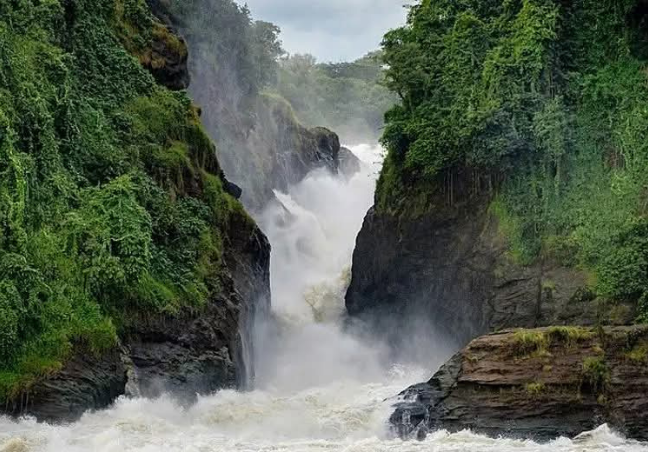
The world’s strongest Waterfall at Murchision is another story to tell as well as the Great Nile River with its source at Jinja. This makes Jinja the adventurous City of East Africa with world class water activities such as: White water rafting of different grades, water tubing, bungee jumping, kayaking, sport fishing, horseback riding, canoeing and boat riding, swimming and Ziplining besides the waters of River Nile.
The various indigenous cultures offers very rich cultural immersion experiences to last a life time with fresh memories al through.
For those looking for holidays, relaxing and honeymooning, the Country offers a combination of breathtaking islands such as Samuka and Ssese with white sand Beaches in lake Victoria as well as Lake Bunyonyi with its rich composition and history! These are combined with the country's well known beautiful weather plus the hospitality of the local people as well as the political stability all together to make Uganda.
Book your Ugandan Safari with Finding Paradise Tours Limited for a unique experience as you explore the Pearl of Africa.
Kenyan citizens do not need a tourist visa when travelling to Uganda. Applicants are required to be present when applying for the Uganda Visa free. This tourist visa typically allows a short term stay. The Uganda tourist visa remains valid for 3 months.
Language: Luganda and English.
Capital City: Kampala.
Currency: Ugandan Shilling.
Credit Cards and ATMs: Use ATMs for the best exchange rates. One of the easiest and most convenient ways to exchange currency in Uganda is by using ATMs. Most major banks in Uganda have ATMs that accept foreign cards, and the exchange rate is usually better than what you would get at a currency exchange bureau.Credit cards are accepted in Uganda, particularly Visa and MasterCard.
Plugs:In Uganda, power plugs and sockets (outlets) of type G are used. The standard voltage is 240 V at a frequency of 50 Hz.
Safety: Uganda is relatively safe to visit, though it has extremely high crime rates, of both violent and petty crime. You should be vigilant and take all possible precaution measures in order to minimize the risk of something wrong happening.
Popular Places To Visit In Uganda
River Nile Source: The Nile is one of the longest rivers in the world and ranks as the world’s largest alongside the Amazon River in South America. You can see one of the sources of this incredible waterway at Jinja, which is about a two hour drive from Kampala through the Mabira forest.
You can enjoy some boat trips around the lake and visit the hydroelectric power plant at Bujagali Falls. The area around Jinja is also known as the adventure capital of East Africa. You can enjoy mountain biking, horse riding, and other adrenaline activities. The town itself is also worth a visit to see some examples of colonial architecture.
The Equator: The equator passes straight through Uganda. The main equator landmark is about 70 km from Kampala towards the south west of the district. This takes about one hour to reach from the city. However, there are also markers in other areas. You can find other markers in the Queen Elizabeth National Park, which is Uganda’s largest national park.
Local Market: There are a few different markets to visit in and around Kampala, such as the famed Owino and Nakasero markets. Owino is known for its hustle and bustle with chaotic looking stalls, whereas Nakasero is a little more relaxed and a preferred first choice.Nakasero is the largest market in the Kampala central area.
Ssesi Islands: The Ssese Islands are an archipelago in Lake Victoria that deserve their own mention. Positioned in the north-west corner of the lake, the largest of these islands is Bugala Island where you can find Kalangala town.
The Sesse Islands are home to the Bantu tribe and is a spiritual location for the local people.
Lake Mutanda: A small and beautiful lake in the Kisoro District of south-west Uganda, Lake Mutanda is in an area affectionately known as Little Switzerland.
The lake can be visited from Kisoro and resides in the African Great Lakes area at the foot of the Virunga Mountains. The mountains are across the Ugandan border, which can be seen from the lake. From here, you can see Mount Muhabura, Mount Sabinyo and Mount Gahinga.
The lake contains different islands and is drained by the Rutshuru River. The forests around the lake provides home for a number of fascinating animals and plants, including habitat for the mountain gorillas.
Kasubi Tombs: Another attraction in Kampala, to learn a little of the region’s cultural history we recommend a tour of the Kasubi Tombs. This is a Unesco World Heritage Listed Site and the burial ground of four Ugandan kings.The site gives a look at Buganda culture, and not only the care they took over their royalty, but other culturally important artifacts, such as the Buganda drums used to communicate important events over long distances.
Lake Mburo National Park: You can spot antelopes, hyena, hippo, buffalo, zebra, and many different birds. There is also a lot of woodland because of the lack of elephants. Elephants are ecosystem engineers and usually tame savanna forests.
There are 13 other water bodies in the region, but the star lake is Lake Mburo. Mburo is part of the protected area”s wetland system, which is why it’s such a great place for birdlife. There around 350 different bird species to find and it’s a must-visit birder destination.
There are many different activities to enjoy both on and around Lake Mburo, such as boat cruises on the lake itself to see hippos, crocodiles, and a number of different birds. Around the lake, you can then enjoy game drives in the protected area to spot the different African wildlife. You will easily find zebra and impala, which are the stars of the park.
You can also enjoy guided walks around the lake to see the beautiful scenery or you can chose to explore the park by horse. You can enjoy horse riding from the highly regarded Mihingo Lodge.
Lake Bunyonyi: This is one of the largest of Africa’s lakes by depth and contains 29 different islands. Not just a popular tourist attraction for international visitors, the lake is also a popular relaxation destination for locals. Around the lake, you can find the towns of Muko and Kyevu, and you can enjoy a range of lakeside accommodation.
There are few buildings on the islands, aside from some infrastructure for tourists and a couple of schools. The main community is the Bufuka Village, which is mainly composed of members of the Bakiga and Batwa tribes.
Lake Victoria: Lake Victoria is the world’s largest freshwater tropical lake and sits as the jewel in the crown of Africa’s Great Lakes region.The lake itself is home to some fascinating features, such as the different islands and reefs. Around 200 species of fish and over 350 different birds call the Lake Victoria region home, which you can spot on some fascinating lake tours.
Ndere Center: The Ndere Center is a highly recommended attraction to experience the country’s traditional dance and music.
For a few days a week the center has a high energy show of Ugandan culture. Enjoy a dinner and theater performance and see dances from a variety of Uganda’s tribes. The show takes place in a 700-seat amphitheater on Sundays at 6pm, Wednesday at 7pm, and Fridays from 7pm.
The Ndere name is from the word for flute, which is the symbol of the troupe because of its diverse and beautiful sound, but also as it’s one of the only musical instruments found across all cultures and is a metaphor for unity.
Kampala: Kampala is Uganda’s capital city and makes a fascinating stop on your Ugandan adventure. This is a great place to spend a day or two experiencing the country’s most important city. Ugandans in general are very friendly and Kampala offers a more relaxed atmosphere than its neighbor of Nairobi across the Kenyan border.
Murchison Falls: Murchison Falls is a fantastic natural attraction located in the aptly named Murchison Falls National Park, which with a few other protected areas create the Murchison National Park. The park has been visited by the likes of Winston Churchill, Ernest Hemingway, and various royals over the years.
The protected area is home to many different animals, including hippos, crocodiles, lions, leopards, elephants, giraffes, antelopes, chimpanzees, and many different birds.
Ziwa Rhino Sanctuary: The Ziwa Rhino Sanctuary protects Uganda’s only wild rhinos and is located just north of Kampala near the famous Murchison Falls.
In total, the sanctuary protects 15 rhinos and is also a fantastic place to see other wildlife.
Enjoy bird watching, nature walks, relaxing, and of course finding and watching the rhinos. The rangers of the sanctuary will guide you around the reserve to find the wildlife, including the rhinos themselves, crocodiles, hippos, antelopes and much more.
Birders often enjoy the reserve and spend time finding some of the 250 different species. You can find some fascinating birds within the sanctuary boundaries, including a number of rare species.
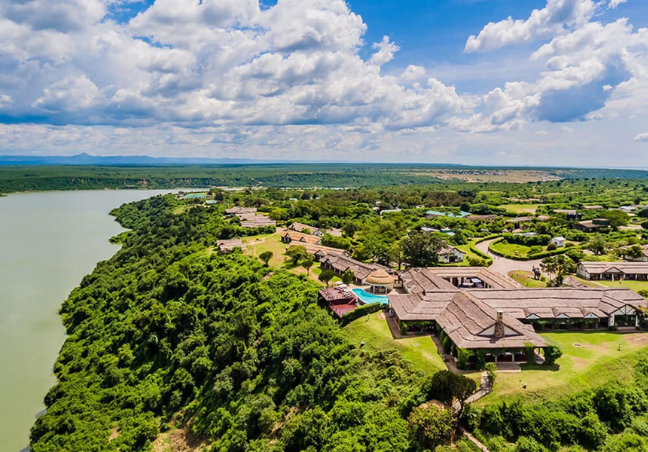
Queen Elizabeth National Park: The Queen Elizabeth National Park region is the most popular tourist destination in Uganda, which is linked to the area’s diversity. The protected area contains many different wildlife-filled habitats, such as forests, wetlands, savanna grasslands, and a number of lakes.
The Queen Elizabeth National Park sits in the western side of Uganda, which is a few hours drive southwest of the country’s capital and largest city, Kampala. There are a few different towns close to the protected area such as Kasese and Bushenyi.
The park contains a lot of wildlife, such as the iconic African safari animals, but is also fortunate to protect a population of our closest relatives, the chimpanzees. Towards the north and across Lake George, the park connects to the Kibale Forest National Park mentioned above.
Kibale Forest National Park: Near Queen Elizabeth National Park in the west of Uganda you can find the Kibale Forest National Park.
Although these forests are connected and chimpanzees are found in the Queen Elizabeth National Park, we recommend seeing our closest relatives in the Kibale area, as it’s a little easier to find the chimpanzees.
In fact, the Kibale Forest is recommended as the best place in the whole of East Africa for seeing chimpanzees.
Bwindi National Park: From some of the Bwindi Lodges, such as the Nkuringo Gorilla Lodge or the Mahogany Springs Safari Lodge, you will have some fantastic birdwatching opportunities. Head out with your knowledgeable guide to spot many of the fascinating birds that call this forest home.
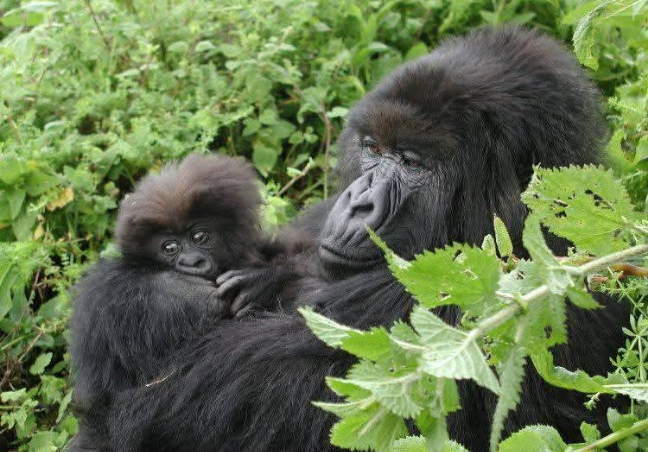
The favorite species to find in the forest include the Turner’s eremomela, Chapin’s flycatchers, Shelley’s crimson-wings, African green broadbills, bee-eaters, Grauer’s swamp warbler, and the abundance of butterfliesMountain gorillas differ from their lowland cousins as their fur is thicker and adapted to the colder temperature at high altitude.
Gorillas live in groups of around 10 individuals and are led by the most powerful silverback with the rest of the group comprising females and younger males. The silverback makes important decisions for the group and protects them from danger.
To see these animals, you can enjoy gorilla tours from Kisoro, which is about 460 kilometres (290 mi) from the capital city of Kampala. Kisoro is located in a fantastic area of Uganda and is in the African Great Lakes region..
Best Time To Visit Uganda
The best time to visit Uganda is during its two dry seasons: between December and February, and between June and August, when conditions are particularly good for trekking to see mountain gorillas and chimpanzees.
Game spotting in national parks is also good at this time, as well as between February and March. Large numbers of wildlife can be seen at waterholes from September through to early October.
Temperatures barely change throughout the seasons, sitting around 24°C to 30°C, so you can visit Uganda all year round. The country is also fabulous for bird spotting at any time of year.